
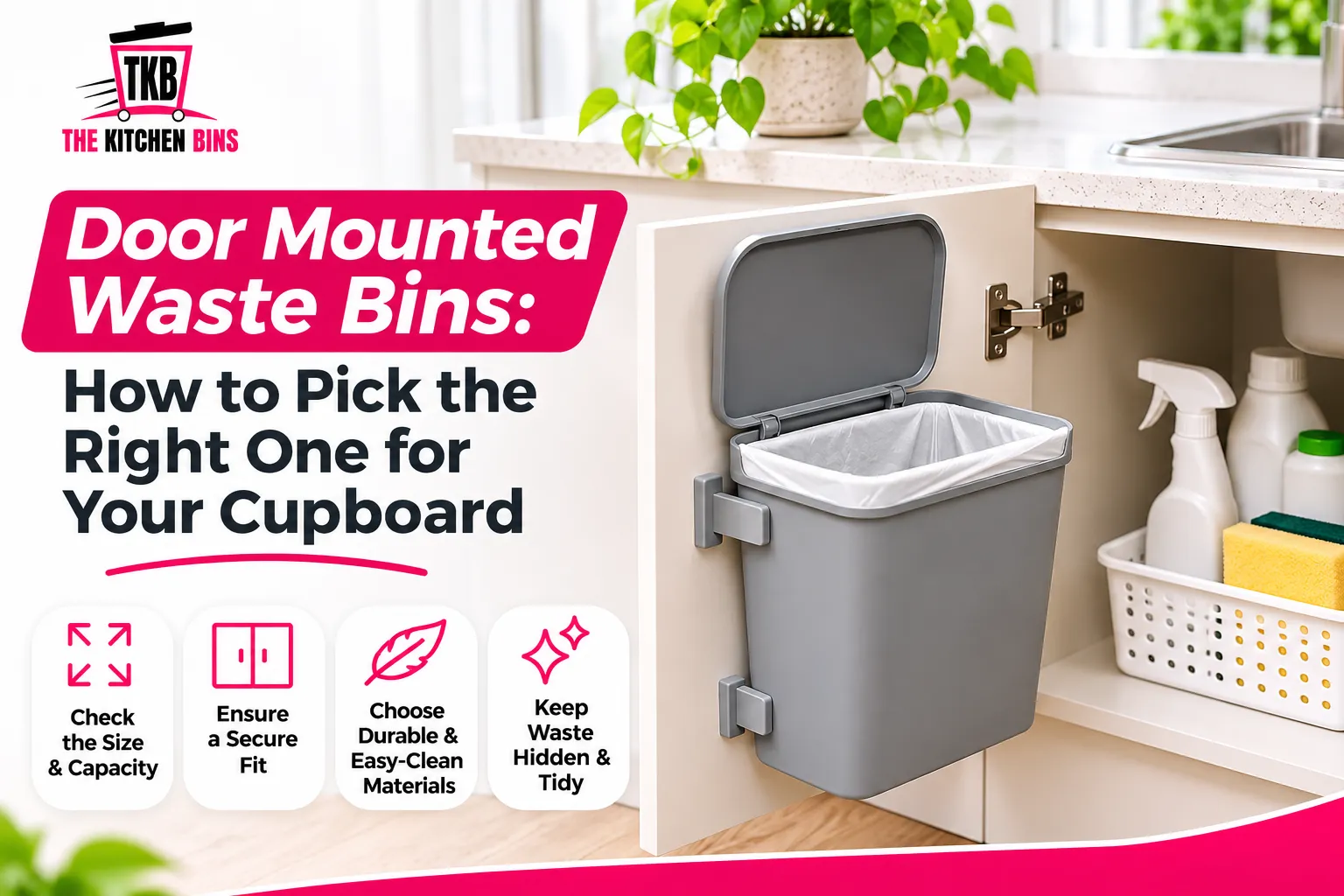


Most people choose a kitchen bin by size and colour. With a bin that lives inside a cupboard, those are the last things to decide. What matters first is how the bin moves, how many compartments you need and whether your cabinet can carry it day after day.
This guide works through those decisions in order, so you end up with a door mounted waste bin that suits your kitchen rather than one that simply looked good online.
Start With How the Bin Moves
“Door mounted” covers two quite different designs, and choosing between them shapes everything else.
Fixed to the door. The bin hangs from a bracket on the inside of the door and swings out as it opens. It’s a simple setup that leaves the cupboard floor clear, which helps when pipes or a shelf are in the way. The trade-off is that the door and hinges carry the full weight of the bin.
Pulled out by the door. A door mounted pull out bin sits on runners fixed inside the cabinet, with a link to the door. When you open the door, the bins glide forward, and the runners take most of the load. This style suits larger twin bins and makes the back of the bucket easier to reach.
Some bins can be set up either way. Kia Ora’s OPTIO bins, for example, have a separate door-mounted bracket, so it’s worth checking whether the bracket comes with a bin or is sold on its own.
Decide How Many Compartments You Need
Before you look at litres, think about how your household sorts rubbish.
If everything goes into one bin, a single bucket keeps things simple. If you separate recycling, or your council collects food scraps, a twin-bin model lets you sort as you go without a second bin on the bench.
Capacity comes next, and there’s no universal right answer. A household that cooks every night fills a bin far faster than one that eats out often. A practical way to judge it is to look at how often you empty your current bin. If you’re taking it out more than you’d like, size up. If rubbish tends to sit for days, a smaller bucket will be emptied sooner and stay fresher.
Keep in mind that twin systems split the total. A 40-litre model made up of two 20-litre buckets holds the same amount as a single 40-litre bin, but each bucket is lighter to carry out.
Make Sure the Cabinet Can Take It
A bin that fits on paper can still fail in the cupboard. Check three things before you order.
Usable space. A cabinet sold as 450mm wide has less room inside once the side panels are counted. Measure the internal width, depth and height, and compare those figures with the bin’s specifications rather than the cabinet size it’s marketed for.
Door and hinges. If the bin will hang from the door, make sure the door is solid and the hinges are firmly fixed. A full bucket weighs much more than an empty one.
The fittings already there. Pipes, shelves and hinge arms can all sit in the path of a moving bin. Open the door slowly and picture where the bin will travel.
Placing an Under Sink Door Mounted Bin
The cupboard under the sink is the most popular spot, because it’s right beside where food is prepared and scraps are rinsed. It’s also the most crowded.
An under sink door mounted bin needs room to clear the sink bowl, waste trap and any water filter, and you still need to reach the shut-off valves. In tight cupboards, a door-fixed bin can sometimes slip in beside the plumbing where a pull out frame won’t fit. If plumbing would need to move to make room, choose a different bin, or have a licensed plumber do the work.
Think About Everyday Cleaning
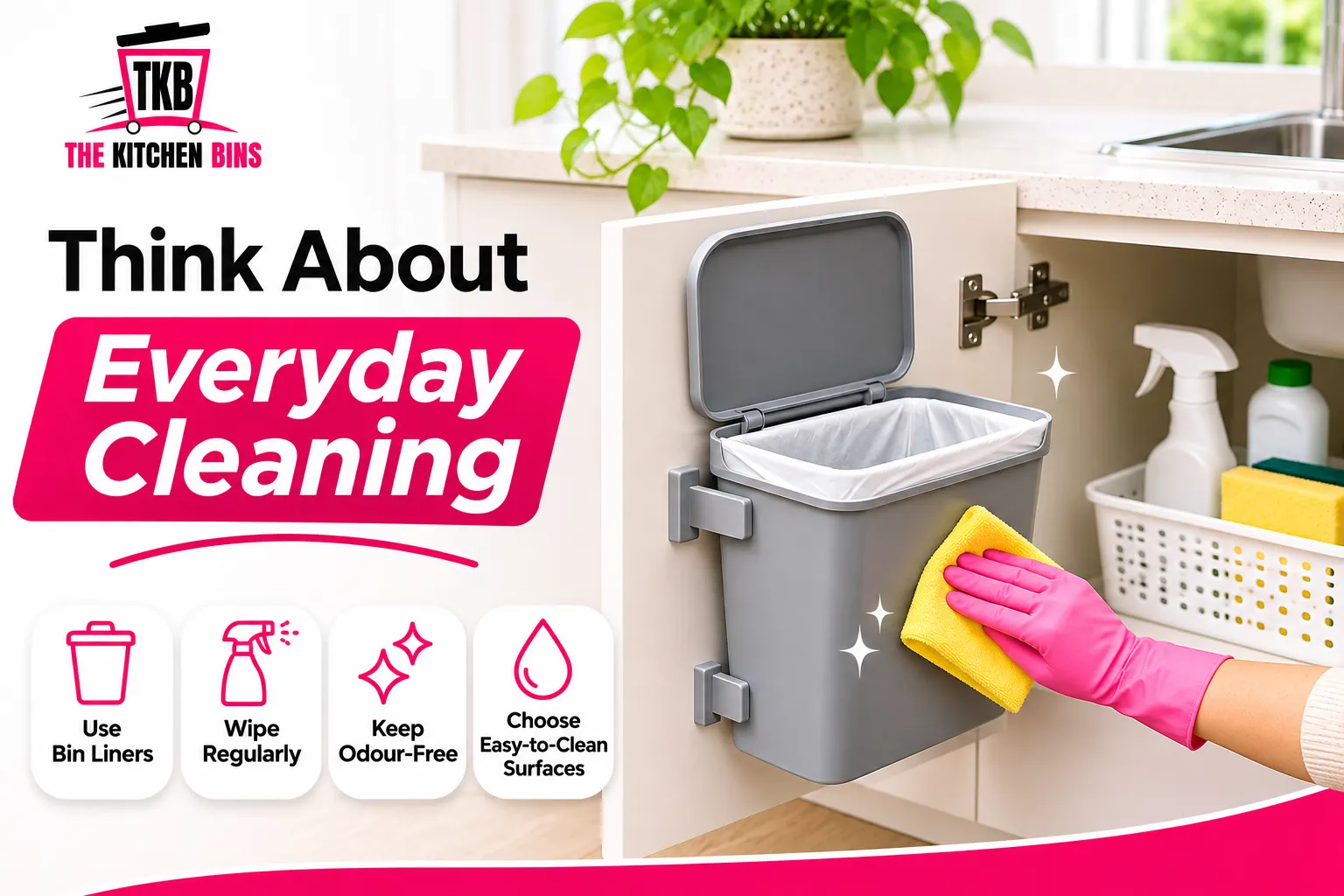
Hidden bins still need looking after. Removable buckets that lift straight out are much easier to wash than ones locked into a frame. Smooth inner surfaces wipe clean faster, and a lid helps keep smells inside the cupboard.
It’s also worth checking whether replacement buckets are available for the model you choose. Buckets wear out long before runners and brackets do, and a spare can keep the whole system in use for years.
Frequently Asked Questions
Can I add a door mounted bin to an existing kitchen?
Yes, many models are made for retrofitting. You’ll need enough internal space, a door in good condition and room for the bin to move without hitting pipes or shelves.
Is a door mounted bin a good idea for a small kitchen?
It can be. Moving the bin into a cupboard frees floor space and keeps rubbish out of sight. The internal size of your cupboard decides which models will fit.
Can a door mounted bin handle recycling?
Yes. A twin-bucket model lets you keep general waste and recycling separate in one cupboard.
Do I need a professional to install it?
Simpler door-fixed bins are often a DIY job with basic tools. Larger pull out systems need accurate alignment between the runners and the door, so follow the instructions closely or ask a cabinet maker for help.
Why Choose The Kitchen Bins?
- Specialist range: door mounted, pull out and freestanding kitchen bins in one place
- Shop by cabinet width: filter the range by 400mm, 450mm, 500mm and 600mm cabinets
- Trusted brands: Kia Ora, Wesco, Hailo, Hideaway and Häfele
- Replacement buckets: spare buckets stocked for selected compatible systems
- Easy ordering: free standard shipping on orders over $200 and a 30-day returns window
About The Kitchen Bins
The Kitchen Bins is part of The Storage Shop, a 100% Australian-owned business that has been helping homeowners since 1992. It was founded by a cabinet maker with more than a decade of experience designing and building kitchens, which is why the range is organised around real cabinet sizes. Based in Lonsdale, South Australia, The Kitchen Bins delivers kitchen waste solutions to homes across Australia.

