


A kitchen waste bin is used so frequently that its location and design can have a noticeable effect on everyday routines. Yet many people choose a bin based mainly on capacity or appearance without considering how it will interact with the rest of the kitchen.
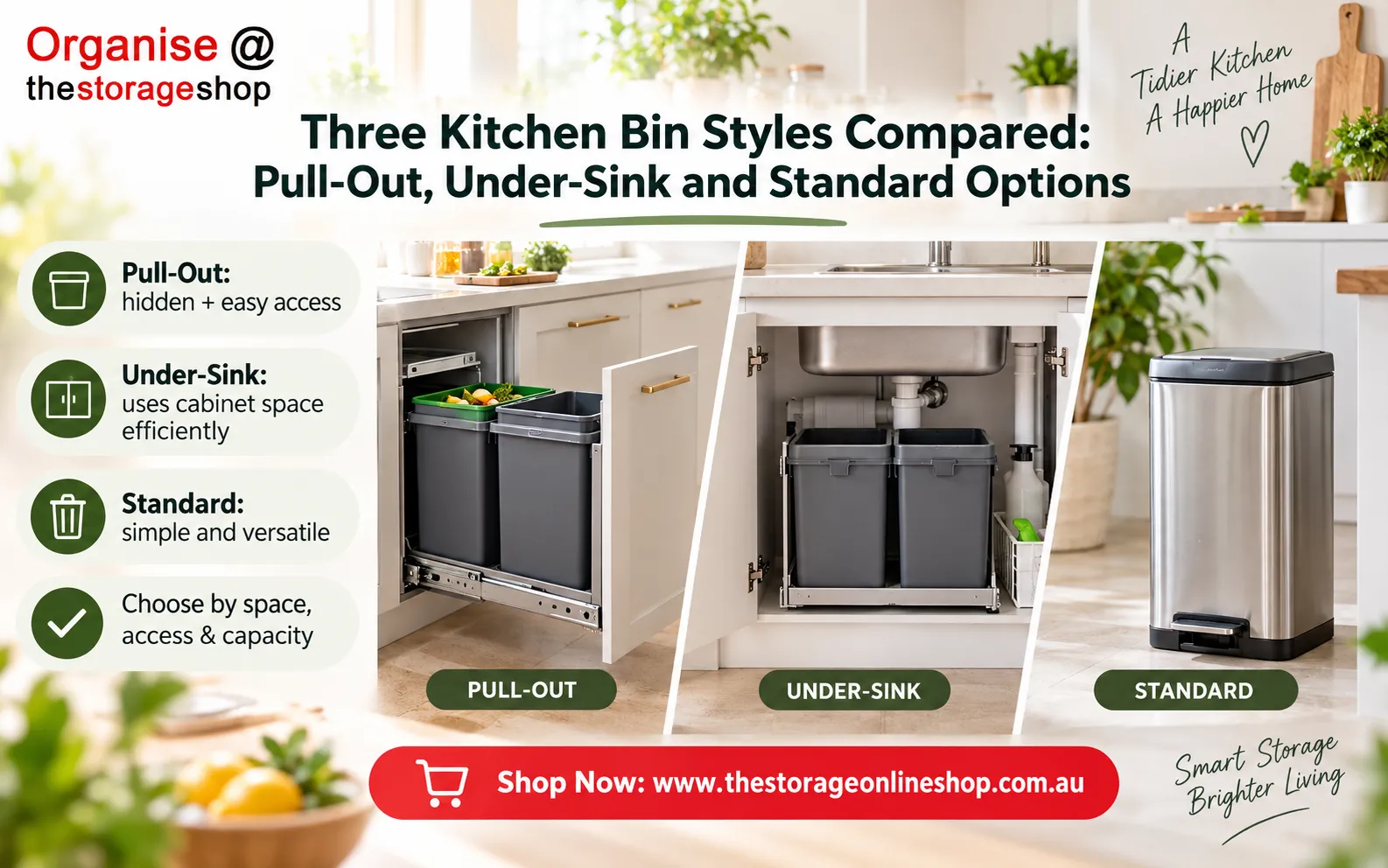
There are several ways to organise household waste. Freestanding containers offer simplicity, under-sink models make use of existing cupboard space, and pull-out designs bring the waste container forward when needed. Understanding how these arrangements differ makes it easier to select kitchen bins that suit the room rather than forcing the room to accommodate them.
Start With the Way Your Kitchen Is Used
Before comparing designs, consider where rubbish is created. Food preparation, unpacking groceries and clearing dishes usually generate waste in specific parts of the kitchen. Ideally, the bin should be accessible from those areas without becoming an obstruction.
A small kitchen may benefit from concealed storage, while a larger room could comfortably accommodate a freestanding container. The best option depends on available space as well as personal preferences.
Three Questions Worth Asking
Think about:
-
Where do you prepare most meals?
-
How much cabinet or floor space is available?
-
How often do you normally empty the rubbish?
These simple questions can eliminate unsuitable options before you start comparing individual products.
Freestanding Bins: Simple and Accessible
A standard freestanding container is straightforward. It can be placed wherever there is sufficient floor space and moved if the kitchen layout changes.
The biggest advantage is accessibility. There is no cupboard door to open and no installation mechanism to operate. This can be useful for households that prioritise immediate disposal.
The downside is that the bin remains visible. It also occupies floor space, which can become inconvenient in a narrow kitchen or busy walkway.
For someone who wants a flexible solution without modifying cabinetry, however, a standard container can still be an effective choice.
Under-Sink Storage: Making Use of Awkward Space
The cupboard below the sink can be difficult to organise because plumbing takes up valuable room. Turning part of this area into waste storage can therefore be a practical way to use space that might otherwise remain underutilised.
An under sink bin needs to work around pipes, cabinet hinges and available height. Measuring the internal cupboard dimensions is important because the space behind the door may be considerably different from the space visible from outside.
Measure More Than Width
Check the:
-
Internal height
-
Usable depth
-
Width between obstructions
-
Door opening
-
Position of plumbing
-
Clearance needed to remove a full liner
A container that fits neatly but cannot be removed comfortably is unlikely to remain convenient in the long term.
Pull-Out Bins: Bringing Waste Within Reach
A pull out bin is designed around movement. Instead of reaching into a fixed cupboard, the waste container slides forward when access is required.
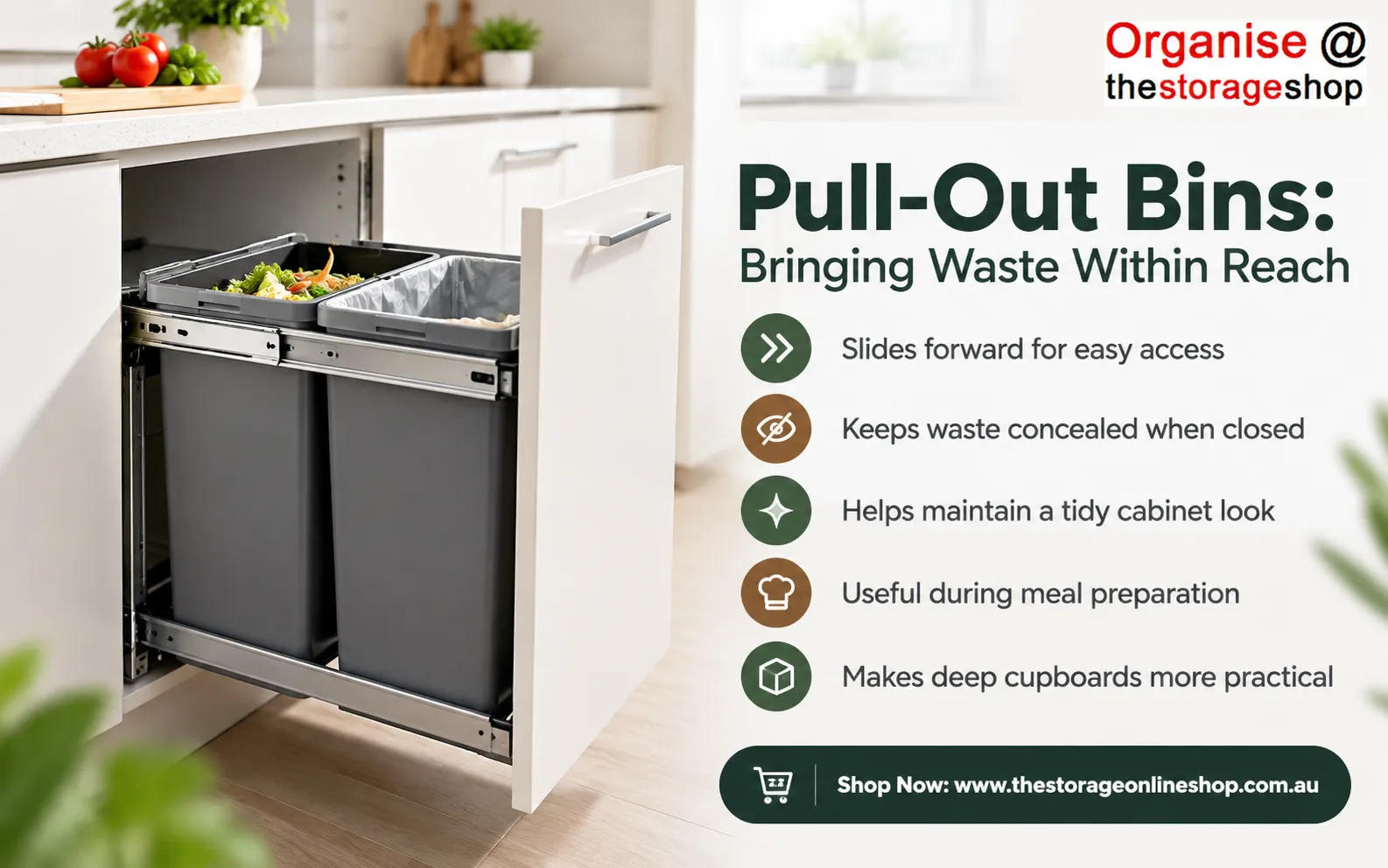
This can be especially useful in kitchens where the rubbish needs to remain concealed but should still be easy to reach. The cabinet stays visually tidy when closed, while the waste area becomes accessible during meal preparation.
Pull-out systems also make deeper cupboards more practical. Rather than having to lean toward the back of a cabinet, the container can move closer to the user.
Which Style Suits a Small Kitchen?
Small kitchens require careful use of every available centimetre. A freestanding bin may take up valuable floor space, making a concealed cupboard option more attractive.
An under-sink arrangement can work particularly well if the cabinet has enough usable room. A pull-out design may be preferable when convenient access is a priority and the cabinetry can accommodate the mechanism.
However, smaller does not always mean better. A container should still provide enough capacity for the household’s waste routine.
Consider Capacity and Emptying Habits
A large bin is not automatically more practical. If it becomes heavy before it is emptied, moving it can be inconvenient. On the other hand, an undersized container may require constant liner changes.
Think about the type of waste your kitchen produces. Bulky food packaging can fill a container quickly, while households that separate recycling may need less general-waste capacity.
Don’t Ignore Liner Removal
Whichever design you choose, imagine removing a full bag. Is there enough clearance to lift it out? Can the container be accessed without moving other kitchen items?
This small practical test can reveal problems that are not obvious when looking only at product dimensions.
Combining Different Waste Requirements
Some kitchens need more than one waste stream. General rubbish, recycling and food scraps may be managed separately depending on household preferences and local waste arrangements.
If multiple containers are needed, think about how they will interact. A pull-out cabinet with more than one compartment can offer an organised approach, while separate freestanding containers may provide greater flexibility.
The objective is to create a system that people can use naturally rather than one that looks organised but becomes inconvenient during busy cooking periods.
Why Choose Us
The Storage Online Shop provides customers with options for approaching kitchen organisation according to different layouts and practical requirements. When selecting waste storage, customers can compare different formats rather than relying on a single style.
A useful shopping experience should make it easier to think about space, access and everyday handling. The focus should remain on finding a solution that fits the customer’s kitchen and routine.
About Us
The Storage Online Shop brings together storage-focused products intended to help households make better use of available areas. Its kitchen-related range allows customers to explore waste-storage solutions alongside other organisational products.
For homeowners planning a kitchen improvement, waste management is worth considering at the same time as drawers, cupboards and other storage areas. A well-positioned bin can contribute to a more functional overall layout.
Making the Final Choice
There is no universal winner between a standard, under-sink or pull-out arrangement. Each style solves a different practical problem.
Choose based on your available floor and cabinet space, how rubbish is produced in your home, and how easily you want to access the container. When those factors guide the decision, kitchen bins become part of the kitchen design rather than an afterthought.
