


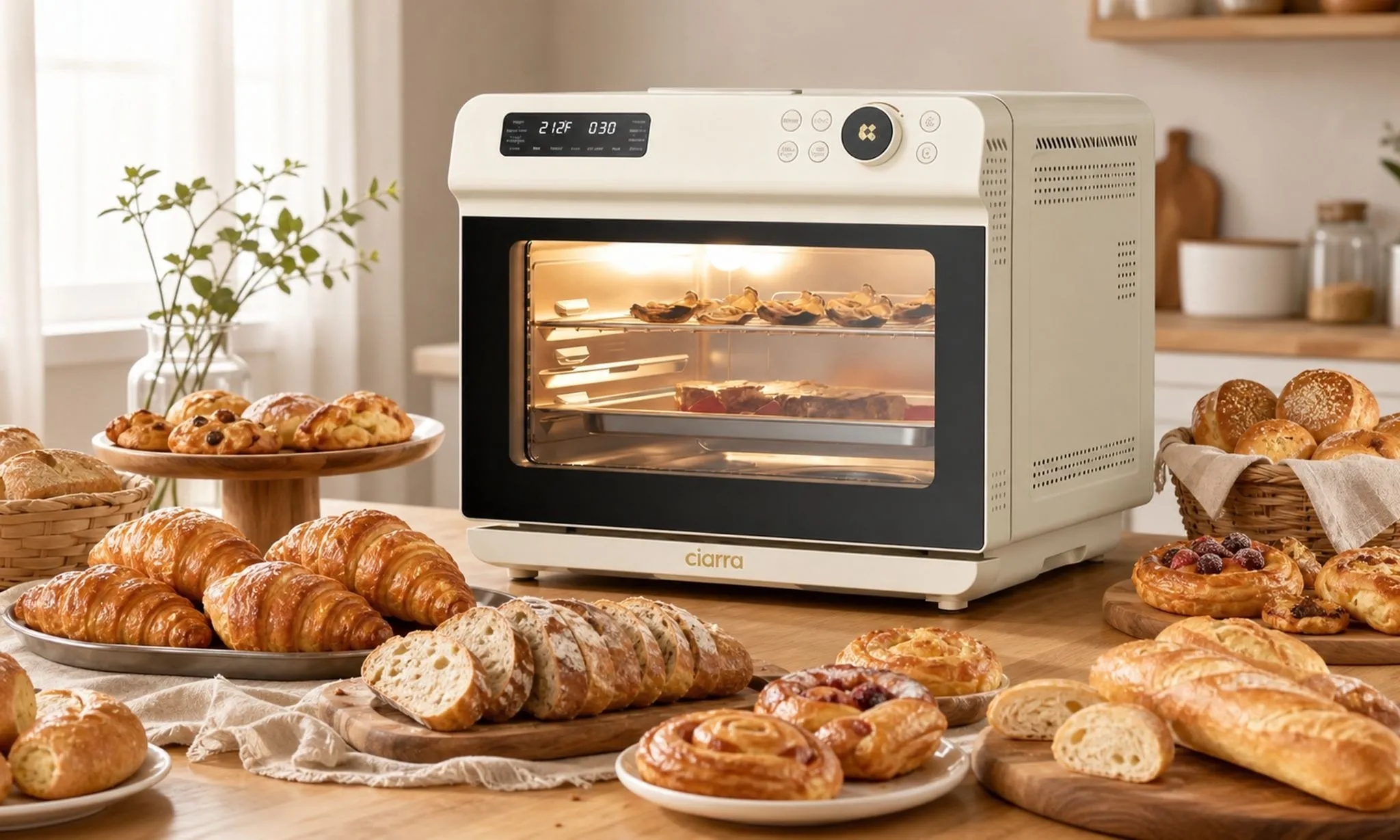
A delicious home-cooked meal does not require a massive kitchen or a full-sized oven. Sometimes, the secret to making everyday cooking easier is a compact appliance that delivers impressive results without taking over your entire space. That is exactly why countertop ovens have become an appealing choice for modern households, busy professionals, apartment dwellers, and anyone who enjoys preparing fresh food with less hassle.
From golden-brown toast and crispy roasted vegetables to homemade pizza and perfectly baked desserts, these versatile appliances bring convenience and creativity to the kitchen. Their compact design makes them especially attractive for people who want reliable cooking performance without the space requirements of traditional ovens.
Whether you are upgrading your kitchen, furnishing a small apartment, or searching for a practical alternative to conventional cooking equipment, a countertop oven can transform the way you prepare meals.
1. Why Countertop Ovens Are Changing Everyday Cooking
Modern lifestyles demand flexibility. Between work, family responsibilities, and daily commitments, spending hours preparing meals is not always realistic. A countertop oven offers a convenient way to cook a variety of dishes while keeping the process simple.
Unlike a conventional oven, which may require more time to heat a large interior, many compact models warm up quickly because of their smaller cooking chambers. This can make them particularly useful for preparing smaller portions, reheating leftovers, or making a quick meal after a long day.
Their versatility is another major advantage. Depending on the model, users can bake, broil, toast, roast, and reheat food in one appliance. Some advanced designs also offer air-frying, convection cooking, and specialized pizza settings.
Instead of filling your kitchen with multiple single-purpose appliances, you can choose one countertop oven that handles several everyday cooking tasks.
2. A Smart Solution for Small Kitchens
Limited kitchen space does not mean you have to compromise on cooking possibilities. In apartments, studio homes, dormitories, and compact houses, every inch of counter space matters.
A countertop oven provides a practical alternative when installing or using a full-sized oven is inconvenient. Its smaller footprint allows it to fit into many kitchen layouts, provided there is enough room for ventilation and safe operation.
These appliances can also be useful in holiday homes, guest suites, and recreational vehicles when the specific model is suitable for that environment.
Before purchasing one, measure your available counter space and check the appliance’s exterior dimensions. Remember to leave the clearance recommended by the manufacturer, particularly around the sides and rear where heat may escape.
It is equally important to consider the interior capacity. A compact model may be ideal for toast and small meals, while a larger unit might better accommodate a family-sized casserole, a whole chicken, or a standard baking tray.
The best choice is not necessarily the smallest appliance. It is the one that fits your space while comfortably handling the meals you prepare most often.
3. Discover More Cooking Possibilities
One of the most exciting benefits of a countertop oven is the variety of foods you can prepare in it. Rather than limiting your cooking to toast and reheated snacks, you can explore an impressive range of recipes.
Baking enthusiasts can prepare cookies, muffins, brownies, small cakes, and other sweet treats. With suitable temperature controls and enough interior space, these appliances can make home baking more accessible.
Busy families can roast vegetables, heat casseroles, prepare chicken portions, or cook frozen foods without using a large oven for a small meal.
Breakfast lovers can toast bread, warm pastries, and cook other suitable breakfast dishes. Some models offer dedicated settings that make these tasks especially straightforward.
Snack enthusiasts can prepare crispy potatoes, toasted sandwiches, mini pizzas, and cheesy garlic bread. Models with air-frying functions may provide another way to achieve a crisp exterior with less added oil than traditional deep-frying.
The key is understanding your appliance’s capabilities. Cooking times and results vary by model, food quantity, tray position, and temperature, so following the manufacturer’s instructions and checking food for doneness will help you achieve consistent results.
4. Understanding the Different Types of Countertop Ovens
Not every oven is designed for the same cooking style. Understanding the main options can help you make a more confident purchasing decision.
Conventional Countertop Ovens
These models use heating elements to cook food and often feature straightforward temperature and timer controls. They are suitable for basic baking, toasting, reheating, and roasting tasks.
Their simplicity makes them attractive to people who want a practical appliance without unnecessary features.
Convection Countertop Ovens
Convection models use a fan to circulate hot air throughout the cooking chamber. This movement can help food cook more evenly and encourage browning, although results depend on the appliance and recipe.
They are worth considering if you regularly roast vegetables, bake cookies, or prepare several items that benefit from consistent heat circulation.
Air Fryer Toaster Ovens
These multifunctional appliances combine several cooking methods in one unit. Depending on the model, they may toast bread, bake desserts, roast meat, and air-fry foods.
They can be particularly useful for households that want more functionality without buying separate appliances.
Digital Countertop Ovens
Digital models typically provide electronic controls, preset cooking programs, and precise temperature adjustments. Some include interior lights, programmable timers, or automatic shutoff features.
These additions can make cooking more convenient, especially for people who appreciate a guided and repeatable cooking process.
5. Energy Efficiency and Everyday Convenience
Using a smaller oven for a small meal can be more practical than heating a full-sized oven. Because countertop appliances generally have smaller cooking chambers, some models require less energy for certain cooking tasks.
However, energy consumption depends on the appliance’s wattage, cooking duration, temperature, insulation, and the amount of food being prepared. A countertop oven is not automatically more energy-efficient in every situation.
For the best results, match the appliance to the size of your meal. Preparing two slices of toast or roasting a small tray of vegetables in a compact oven may make more sense than heating a much larger appliance.
Preheating only when necessary, avoiding repeated door openings, and cleaning away accumulated grease can also help support efficient operation.
Convenience matters just as much as energy use. A well-designed countertop oven can reduce the effort involved in everyday meals, making it easier to prepare fresh food instead of relying entirely on takeaway orders or packaged alternatives.
6. Features Worth Considering Before You Buy
The right features can make the difference between an appliance you occasionally use and one that becomes essential to your daily routine.
Cooking capacity: Choose an interior large enough for your usual dishes. Check the maximum tray dimensions rather than relying exclusively on exterior measurements.
Temperature range: A broad, clearly marked temperature range offers greater flexibility for baking, roasting, and reheating.
Convection settings: A fan-assisted cooking option may be helpful if even browning and faster cooking are priorities.
Timer and automatic shutoff: These features can simplify meal preparation and reduce the risk of accidentally leaving the appliance running.
Easy cleaning: Removable crumb trays, accessible interiors, and suitable nonstick accessories can make maintenance less frustrating.
Door design and controls: Look for a sturdy door, readable settings, and controls that are comfortable to operate.
Safety and ventilation: Check electrical requirements, heat clearances, and the manufacturer’s instructions before positioning the oven. Always place it on a stable, heat-resistant surface.
Consider your actual cooking habits before paying extra for advanced features. A household that mainly reheats food may not need the same capabilities as someone who bakes regularly or prepares a wide range of meals.
7. How to Get Better Results From Your Countertop Oven
Even an excellent appliance performs best when used correctly. A few simple habits can noticeably improve cooking results.
First, avoid overcrowding the cooking chamber. Leaving sufficient room for hot air to circulate is particularly important when roasting vegetables or preparing crispy foods.
Second, use cookware approved for your particular oven. Not every dish, tray, or baking container can safely withstand the appliance’s operating temperatures.
Third, monitor cooking progress, especially when adapting recipes written for full-sized ovens. Smaller cooking chambers and different heating patterns can affect cooking times.
Fourth, clean the crumb tray and remove food residue regularly after the appliance has cooled. Built-up grease and crumbs can produce smoke, unpleasant odors, and potentially hazardous conditions.
Finally, allow hot trays and accessories to cool safely before handling or cleaning them. Using appropriate oven mitts and keeping flammable materials away from the appliance are simple but important precautions.
These habits help protect your appliance while making your meals more consistent.
8. Are Countertop Ovens Worth the Investment?
For many households, the answer is yes. A countertop oven can provide useful cooking flexibility, particularly when a full-sized oven is inconvenient, oversized for everyday meals, or unavailable.
The value becomes even clearer when the appliance matches your routine. Someone who regularly bakes small batches, prepares quick lunches, or cooks for one or two people may appreciate the convenience every day. A larger household may benefit from a higher-capacity model that handles substantial portions.
Nevertheless, there are limitations to consider. Smaller models may not accommodate large baking dishes, whole turkeys, or multiple trays at once. Some appliances also have uneven heating patterns or limited temperature accuracy.
Before purchasing, compare capacity, available cooking modes, warranty coverage, cleaning requirements, and overall build quality. Reading independent reviews and checking the manufacturer’s specifications can help you avoid choosing a model based solely on appearance or a long list of features.
The best investment is an oven that solves a genuine kitchen problem and makes cooking more enjoyable.
Conclusion: Make Every Inch of Your Kitchen Work Smarter
Great cooking is about making thoughtful choices, not simply owning the biggest appliances. With the right capacity, useful cooking settings, and easy-to-maintain design, countertop ovens can bring impressive versatility to everyday meals while helping you make better use of your kitchen space. Whether you want crisp snacks, freshly baked treats, roasted vegetables, or quick weeknight dinners, the right model can simplify your routine without sacrificing creativity. For an even more functional cooking space, consider how your oven works alongside other essential appliances, including a range hood, which can help manage cooking fumes and grease when properly selected and installed. Choose equipment that suits your cooking habits, maintain it carefully, and enjoy a kitchen that combines convenience, comfort, and delicious results.
